|
We only look
at the edges.
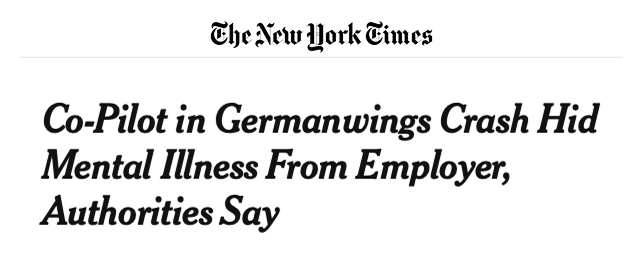
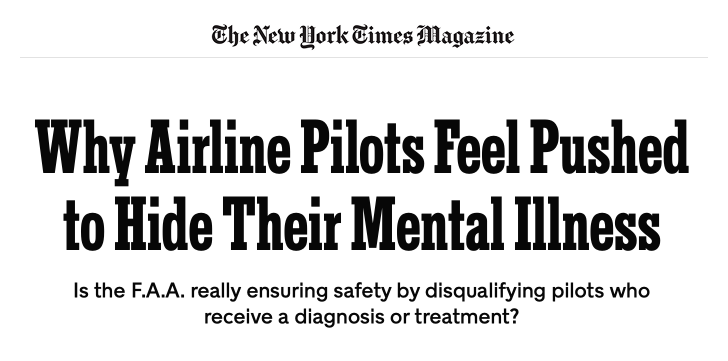
Aviation's mental health conversation often starts with catastrophe: a Germanwings, a headline, a wreckage. These events command attention, fill front pages, and shape policy. But those events are not where most pilots struggle.
The real story is quieter.
Chronic fatigue, ongoing stress, burnout, emotional strain. Aviation is built to respond when something goes wrong, but far less equipped to see the ongoing pressure pilots carry every day.
The support exists.
So why aren't they using it?
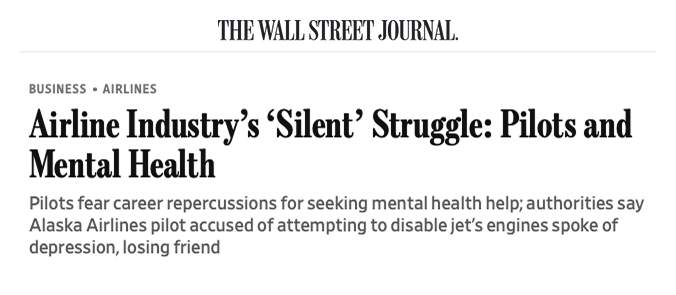
The barrier isn't access. It's fear.
Employee Assistance Programs. Peer support. Policies and pathways. Structurally, aviation is prepared. And yet—47% of pilots and air traffic controllers have wanted mental health support at some point. Only 12% have used what's available. Those resources are not being used the way they were intended.
Pilots don't just avoid seeking help.
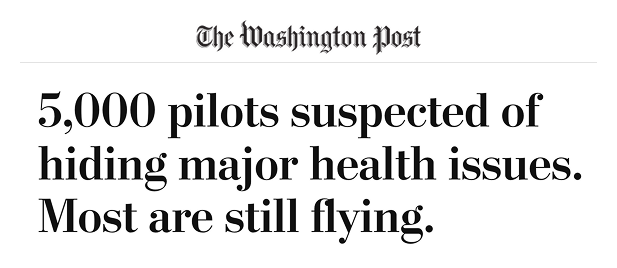
They actively hide it.
63% misrepresent health information to protect their certification. 72% seek unofficial medical advice. Nearly half perform duties while experiencing symptoms that warrant evaluation.
I wanted to keep flying, so I just tried to deal with it.
seek unauthorized medical advice
Military Medicine, 2023 — academic.oup.com/milmed
conceal or misrepresent health information to protect their certification
CMS Human Factors Conference, 2025 — cms-conferences.org
flew while experiencing symptoms that warranted evaluation
CMS Human Factors Conference, 2025 — cms-conferences.org
withheld information during medical screening
Military Medicine, 2023 — academic.oup.com/milmed
used undisclosed prescription medication while flying
Military Medicine, 2023 — academic.oup.com/milmed
Welcome to the
operational middle.
This is where the real story lives: not in dramatic moments, but in the accumulation of ordinary ones. No single thing breaks a person. It's the compound weight of prolonged isolation, work-related stress, and relationships strained by extended time away.
At the same time, pilots stay in this career because they love it.
But love doesn't eliminate cost; it just makes the cost harder to name.
The system can change.
If we build it right.
Aviation has spent decades perfecting machines, procedures, and checklists. The system is exceptional at catching failure. It knows how to detect the broken thing.
What it hasn't built yet is a system that sees the person who is functioning—but not fully supported. Who is coping quietly, concealing carefully, and adapting under pressure they won't name.
The greatest threat to safety isn't the rare, visible crisis. It's the invisible accumulation.
And the question isn't whether to address it. It's whether we can build a system they'll actually trust.